



Mangroves look calm on the surface—still water, tangled roots, and quiet shorelines. But if you slow down and watch, you’ll notice something: mangroves are alive in every direction.
These coastal forests sit right where land meets sea, and that “in-between” zone creates a unique home for wildlife. Mangroves feed thousands of species and support a complex food web—from tiny insects and microbes to fish, crabs, and large birds hunting in the shallows. In many parts of the world, mangroves are also called nature’s nurseries, because they protect young marine life until it’s ready to move into deeper waters.
Why mangroves attract so much wildlife
Mangroves offer three things that wildlife always needs:
1) Shelter
Mangrove roots form a natural “maze,” giving small fish and other creatures a safe place to hide from predators. This is one reason mangroves are famous as nursery and feeding areas for young marine life.
2) Food
Mangroves drop leaves and organic material that slowly breaks down. That “natural compost” becomes food for crabs, shellfish, and tiny organisms—supporting the entire ecosystem.
3) A safe place to rest and breed
Many birds use mangroves as feeding and resting habitat, especially around shallow channels and quiet lagoons.
Birds you can spot in mangroves
Mangroves are a dream location for birdwatching because shallow waters make hunting easy.
Wading birds: egrets and herons
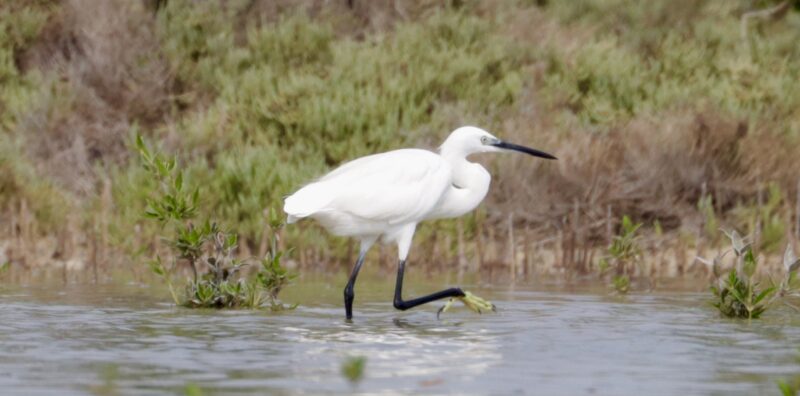
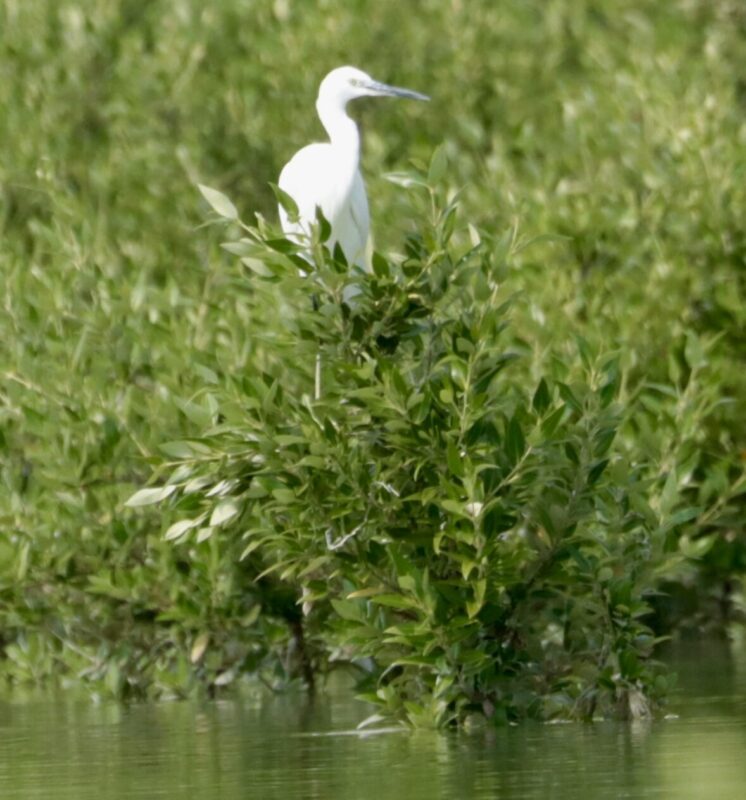
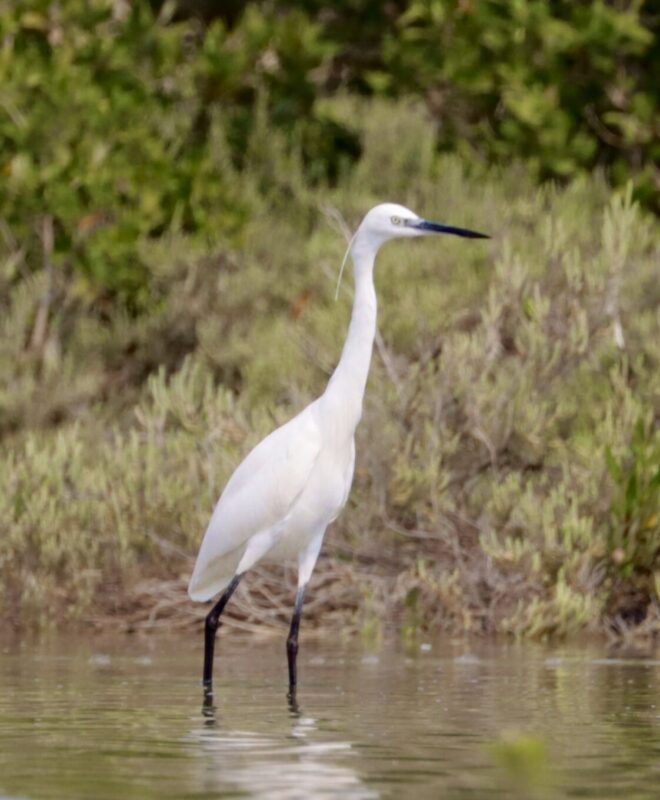
These are the classic “shore hunters.” You’ll often see them standing perfectly still, then striking quickly for small fish. The white bird in the photo is a great example of this mangrove moment: patience, silence… then a sudden move.
Migratory and resident water birds
Coastal wetlands (including mangroves) are important for many water birds—especially during migration seasons. With a little quiet observation, you may spot feeding behavior, flock movement, and resting areas.
The hidden world under the surface
A lot of mangrove wildlife is easy to miss—until you know what to look for.
Fish and shrimp: the nursery residents
Mangroves are widely recognized for providing nursery and feeding areas for fish and shrimp, especially during early life stages when protection matters most.
Crabs, molluscs, and shellfish: the clean-up crew
Crabs and shellfish help recycle nutrients by feeding on leaves and organic matter. They keep the system productive and balanced—and they’re a big reason mangroves stay so “full of life.”
Micro-life: the ecosystem engine
Even microbes and fungi matter here. They break down fallen leaves and recycle nutrients that support the whole mangrove forest.
Mangroves are biodiversity hotspots
Mangroves look calm on the surface—still water, tangled roots, and quiet shorelines. But if you slow down and watch, you’ll notice something: mangroves are alive in every direction.
These coastal forests sit right where land meets sea, and that “in-between” zone creates a unique home for wildlife. Mangroves feed thousands of species and support a complex food web—from tiny insects and microbes to fish, crabs, and large birds hunting in the shallows. In many parts of the world, mangroves are also called nature’s nurseries, because they protect young marine life until it’s ready to move into deeper waters.
Why mangroves attract so much wildlife
Mangroves offer three things that wildlife always needs:
1) Shelter
Mangrove roots form a natural “maze,” giving small fish and other creatures a safe place to hide from predators. This is one reason mangroves are famous as nursery and feeding areas for young marine life.
2) Food
Mangroves drop leaves and organic material that slowly breaks down. That “natural compost” becomes food for crabs, shellfish, and tiny organisms—supporting the entire ecosystem.
3) A safe place to rest and breed
Many birds use mangroves as feeding and resting habitat, especially around shallow channels and quiet lagoons.
Birds you can spot in mangroves
Mangroves are a dream location for birdwatching because shallow waters make hunting easy.
Wading birds: egrets and herons
These are the classic “shore hunters.” You’ll often see them standing perfectly still, then striking quickly for small fish. The white bird in the photo is a great example of this mangrove moment: patience, silence… then a sudden move.
Migratory and resident water birds
Coastal wetlands (including mangroves) are important for many water birds—especially during migration seasons. With a little quiet observation, you may spot feeding behavior, flock movement, and resting areas.
The hidden world under the surface
A lot of mangrove wildlife is easy to miss—until you know what to look for.
Fish and shrimp: the nursery residents
Mangroves are widely recognized for providing nursery and feeding areas for fish and shrimp, especially during early life stages when protection matters most.
Crabs, molluscs, and shellfish: the clean-up crew
Crabs and shellfish help recycle nutrients by feeding on leaves and organic matter. They keep the system productive and balanced—and they’re a big reason mangroves stay so “full of life.”
Micro-life: the ecosystem engine
Even microbes and fungi matter here. They break down fallen leaves and recycle nutrients that support the whole mangrove forest.
Mangroves look calm on the surface—still water, tangled roots, and quiet shorelines. But if you slow down and watch, you’ll notice something: mangroves are alive in every direction.
These coastal forests sit right where land meets sea, and that “in-between” zone creates a unique home for wildlife. Mangroves feed thousands of species and support a complex food web—from tiny insects and microbes to fish, crabs, and large birds hunting in the shallows. In many parts of the world, mangroves are also called nature’s nurseries, because they protect young marine life until it’s ready to move into deeper waters.
Why mangroves attract so much wildlife
Mangroves offer three things that wildlife always needs:
1) Shelter
Mangrove roots form a natural “maze,” giving small fish and other creatures a safe place to hide from predators. This is one reason mangroves are famous as nursery and feeding areas for young marine life.
2) Food
Mangroves drop leaves and organic material that slowly breaks down. That “natural compost” becomes food for crabs, shellfish, and tiny organisms—supporting the entire ecosystem.
3) A safe place to rest and breed
Many birds use mangroves as feeding and resting habitat, especially around shallow channels and quiet lagoons.
Birds you can spot in mangroves
Mangroves are a dream location for birdwatching because shallow waters make hunting easy.
Wading birds: egrets and herons
These are the classic “shore hunters.” You’ll often see them standing perfectly still, then striking quickly for small fish. The white bird in the photo is a great example of this mangrove moment: patience, silence… then a sudden move.
Migratory and resident water birds
Coastal wetlands (including mangroves) are important for many water birds—especially during migration seasons. With a little quiet observation, you may spot feeding behavior, flock movement, and resting areas.
The hidden world under the surface
A lot of mangrove wildlife is easy to miss—until you know what to look for.
Fish and shrimp: the nursery residents
Mangroves are widely recognized for providing nursery and feeding areas for fish and shrimp, especially during early life stages when protection matters most.
Crabs, molluscs, and shellfish: the clean-up crew
Crabs and shellfish help recycle nutrients by feeding on leaves and organic matter. They keep the system productive and balanced—and they’re a big reason mangroves stay so “full of life.”
Micro-life: the ecosystem engine
Even microbes and fungi matter here. They break down fallen leaves and recycle nutrients that support the whole mangrove forest.
Mangroves are biodiversity hotspots
Mangroves are not just “trees near the sea.” They are coastal wetlands—and wetlands are among the most biologically productive habitats on Earth. Protecting mangroves means protecting the wildlife web that depends on them.
How to explore mangroves without disturbing wildlife
Follow safe routes to avoid damaging fragile areas and roots.
Keep a respectful distance from birds (especially if they’re feeding).
Stay quiet—sound travels far over water.
Don’t chase “the perfect photo.” Let wildlife behave naturally.
Leave no litter (plastic is one of the biggest threats in coastal ecosystems).
FAO – Mangrove ecosystem restoration and management: https://www.fao.org/3/i4147e/i4147e.pdf
FAO – Mangroves (overview & ecosystem services): https://www.fao.org/mangroves/en/
Smithsonian Ocean – Mangroves (food web & habitat): https://ocean.si.edu/ocean-life/plants-algae/mangroves
Ramsar – Wetlands and biodiversity: https://www.ramsar.org/about/wetlands-and-biodiversity
IUCN – Red List of Ecosystems: https://iucnrle.org/